-
I have a small breed dog, can I leave the food out for the whole day?
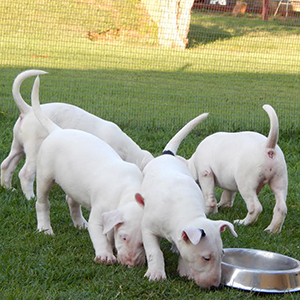
Ideally it would be best to fee your puppy 3 times per day until 3 months of age. While feeding 3 times daily, feed controlled amounts and if your puppy does not want to eat when you offer him/her food, allow 10 – 15 min before lifting the food from the ground until the next feeding session.
Feeding times allows owners to feed different diets to their different pets allowing a more controlled and health/breed/nutrition/age specific diet per dog.
-
Must I see the same doctor when I visit your practice?
Not necessary at all. Roodekruin is a multi-man practice, and getting a second opinion from a colleague is always a good idea. All of our vets have access to each patients’ history and will be able to advise you to the best of their ability; even if they did not initially treat your pet.
-
At what age must I have my pet neutered/spayed?
Animals can be spayed any time from 6 months of age to prevent uterine infections in females and prostate complications in males.
Females are spayed and males are neutered.
-
Why must I vaccinate annually?
To keep your animals immune system stimulated and strong, it is advised and necessary to have them vaccinated annually. If your pet is vaccinated annually they will be able to withstand infection to a greater extent.
-
What if I never vaccinated my adult dog? Can I “catch up” on vaccines?
Yes, surely. We will count the day of vaccination as Day 0 (zero) and then repeat the vaccination on Day 30 (thirty) and from there onwards do yearly vaccinations.
-
Do you have after hour fees?
Yes we do charge a fee for after hours. Kindly contact us for the rates.
-
Will my pet be alright under anaesthetic?
As with humans, any procedure that requires anaesthetic carries some risk. Each animal that is admitted at our hospital for a procedure will have a full examination by a vet. This will ensure they are healthy enough to handle the anaesthetic. If we feel that there is anything to be concerned about, they will discuss the risks with you. We are able to run a pre-anaesthetic blood test to check kidney and liver function before proceeding with the anaesthetic. This may also be recommended in very old patients as well as patients that have previously had complications. Your pet will be monitored continuously to ensure that they are stable and safe.
-
My pet gets car sick! What must I do?
Never travel with your pet on a full stomach; especially if they are prone to motion sickness. If you plan to travel, ensure that they are starved for 10 hours beforehand. Medication to reduce motion sickness is available through your veterinary practice. We will however need to see the pet for a health check up.
-
Can you give a prescription on the phone?
No, only for patients on chronic medication which we have seen in the last 6 months. If you are a client at another vet, we will need to obtain a copy of the script from them or alternatively speak to them regarding treatment.
-
Can you cremate my pet?
Yes we can have your pet cremated. We offer 2 options. We can have your pet sent for communal cremation or private cremation. With private cremation you will receive your beloved pets’ ashes back in a personalised jar with their name on. Private cremation is done at an extra fee.
-
What should I do if I find a stray?
We advise clients to take the stray animals to their nearest vet to be scanned for a microchip. If the animal is microchipped they will easily be reunited with the owners.
On occasion; we are able to keep strays in our hospital if the “finder” is unable to keep them. These strays are taken in at the vets’ discretion and we reserve the right to turn strays away should we be unable to take them in.
It is always a good idea to inform all the vets in the area if you have found a stray as they may be aware of the pet missing. Also contact local shelters, welfares and the SPCA.
- 1